Home village
Tzununá
A quiet Mayan village of hummingbirds and water — hills, lake views, and an easy pace. Waterfall hikes, swimming, birdwatching, and walks along the shore.
About · Around the lake
Lake Atitlán — one of the most remarkable places on earth
The lake
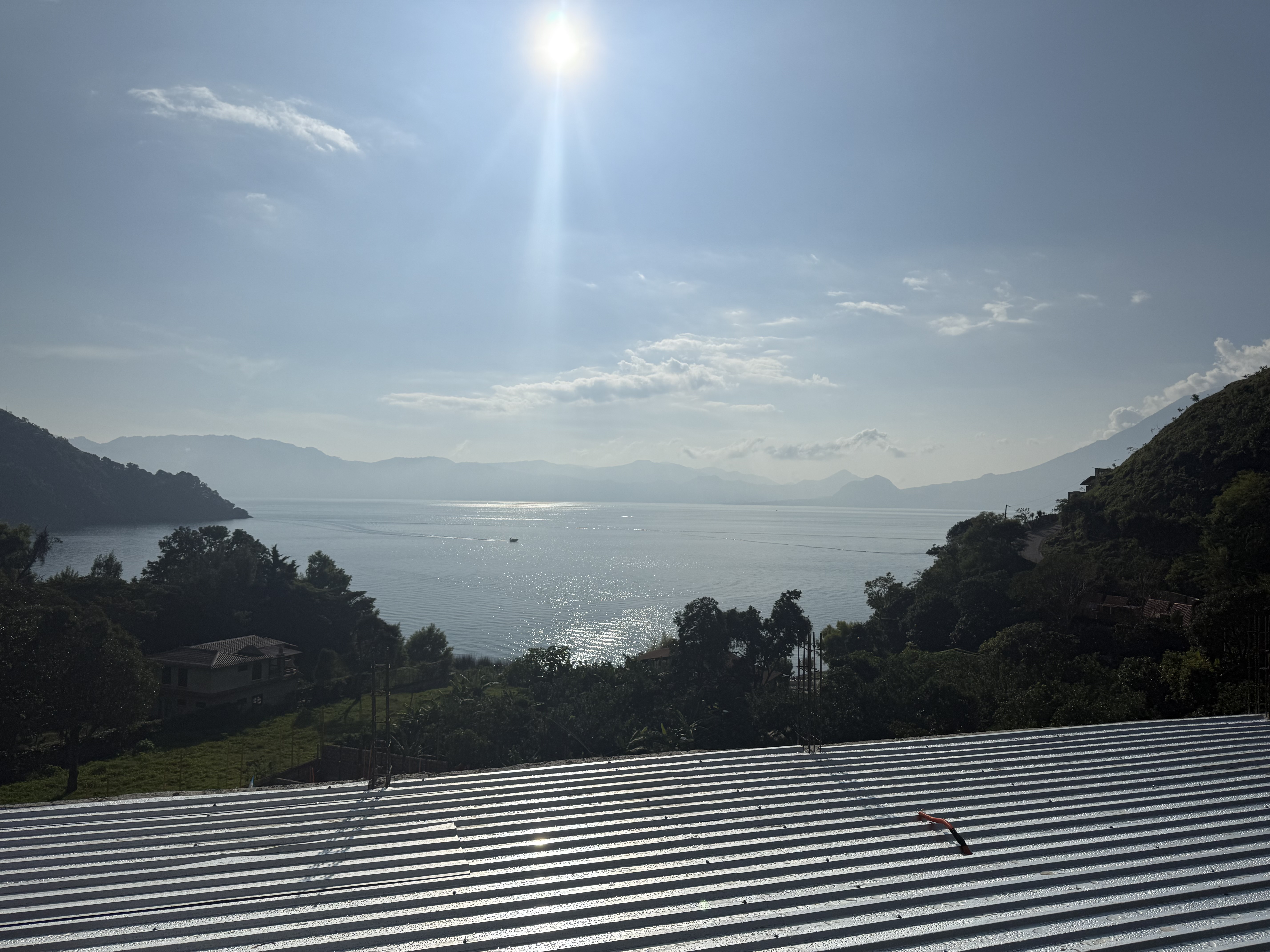
Lake Atitlán was formed thousands of years ago by a massive volcanic eruption. The caldera filled with water and became the deepest lake in Central America, ringed by the volcanoes Atitlán, Tolimán, and San Pedro.
The lake sits at about 1,560 meters. The air is clean, the water is cold and clear, and the light changes hourly. Travelers have been coming here for centuries — most leave changed in ways they find hard to explain.
The local Maya call it the bellybutton of the world. Whether or not you feel the energy, something shifts when you sit by this water long enough.
More than a dozen Mayan villages ring the lake. Lanchas connect them through the day. These are the main ones worth knowing from Tzununá.
Home village
A quiet Mayan village of hummingbirds and water — hills, lake views, and an easy pace. Waterfall hikes, swimming, birdwatching, and walks along the shore.
5–10 min by lancha / ~40 min on foot
The lake’s spiritual hub: meditation centers, holistic treatments, healthy cafés, and a calm walkable center. Cerro Tzankujil reserve has a popular lake jump platform and kayak rentals.
15 min by lancha
The main transport hub — ATMs, markets, restaurants, and Calle Santander handicrafts. Best place to withdraw cash and stock up before heading back to quieter villages.
20 min by lancha
More social backpacker energy — language schools, bars, restaurants, and the San Pedro Volcano hike. Weekend markets are lively.
25 min by lancha
Artists and cooperatives — weaving, natural dyes, coffee, chocolate, murals. Calmer and more local than the bigger tourist stops.
10 min by lancha
Tiny cliffside village with quiet hotels, lakeside restaurants, and scuba diving. The lakeshore hike toward San Marcos is one of the region’s best walks.
30 min by lancha
A larger traditional Mayan town under Volcán Tolimán, known for the Maximón shrine and a deeper cultural day trip.
San Pedro Volcano is a classic full-day hike with a guide. More experienced hikers also look to Atitlán and Tolimán.
Rentals are easy in San Marcos and San Pedro. Mornings are best — before the afternoon Xocomil wind picks up.
Seasonal falls above Tzununá and nearby villages run strongest in rainy season. Ask locally for current conditions.
Public lanchas link the villages all day. A private boat can cover several towns in a half day if you want to see more.
Freshwater volcanic diving operates from Santa Cruz — unusual visibility and underwater formations.
Tandem flights above the lake and hillside rides through coffee country can be arranged locally.
On the water
In the villages